Mixing Time in Horizontal Powder Mixers
Mixing time in powder processingdirectly affects product quality. It also plays a decisive role in production capacity. Therefore, businesses should not select mixing times arbitrarily; each recipe dictates its own specific process conditions. Mixing time in horizontal powder mixers depends on many variables. The nature of the raw material is the primary factor. Additionally, particle size, density, and fill level influence the duration. Mixer geometry and rotor speed also alter the outcome. Furthermore, the feeding sequence plays a significant role in the homogenization process.
A short mixing time does not always ensure high capacity. If the mixer fails to adequately disperse the raw materials, product quality suffers. Conversely, an unnecessarily long mixing time reduces capacity and leads to higher energy consumption. Metkan Makine We evaluate the entire process when developing horizontal powder mixer solutions. We analyze the physical properties of the product, then consider production capacity and the formulation structure. This allows us to design the optimal mixer and process configuration for the facility.
Contents
- Why is mixing time important in horizontal powder mixers?
- How do raw material properties affect mixing time?
- Does particle size alter mixing time?
- Why is the difference in density important?
- How does the fill level affect mixing performance?
- Why is mixer geometry important?
- How does rotor speed affect mixing time?
- How does the feeding sequence affect homogeneity?
- Do additives extend the mixing time?
- How is the optimum mixing time determined?
- What problems arise from prolonged mixing?
- How does maintenance affect mixing performance?
- How does automation control mixing time?
- How is production capacity balanced with mixing time?
- Frequently Asked Questions
Why is mixing time important in horizontal powder mixers?
Mixing time in horizontal powder mixersIt directly affects the distribution of ingredients in the recipe. If the mixer does not operate sufficiently, raw materials will not be distributed homogeneously. The proportion of certain ingredients may increase in some areas, while decreasing in others. Consequently, product quality may vary throughout the batch. Facilities engaged in recipe-based production must pay particular attention to this, as even low-dosage additives can alter product performance. Therefore, the process team should not determine the duration based solely on capacity targets.
However, a longer duration does not always yield better results. The mixer reaches the target homogeneity at a specific point; operating beyond this point generally reduces production capacity and increases energy consumption. Thus, the facility must identify the optimum duration—one that achieves the desired homogeneity within the most efficient cycle possible. This allows the facility to strike the right balance between quality and capacity.
How Do Raw Material Properties Affect Mixing Time?
Every powder product behaves differently inside the mixer. Free-flowing dry materials move more easily. In contrast, moist or sticky products require different mixing conditions. As moisture content increases, some powders form clumps. These clumps limit contact between the components. Consequently, the mixer may take longer to achieve homogeneity. Additionally, the product may adhere to the mixer surfaces, thereby reducing the amount of material actively being mixed.
Flowability also affects the duration. Free-flowing products respond more quickly to the mixer's action. However, raw materials with poor flow characteristics can create stagnant zones within the mixer. Therefore, the operator must carefully examine the material's flow characteristics. Metkan MakineWhen selecting a mixer, one does not look solely at mass or volume values; the physical properties of the material are also evaluated. This ensures that the equipment design aligns with actual process conditions.
Does Particle Size Affect Mixing Time?
Particle size, mixing time in a horizontal powder mixer is one of the key variables affecting... Particles of similar size tend to move more uniformly in most processes. However, a wide particle size distribution results in different mixing behavior. Coarse and very fine particles may coexist in the same recipe. In such cases, the mixer must keep the particles in constant motion; otherwise, coarse and fine fractions may segregate into different zones.
This issue is particularly significant for micronized products. Very fine particles can exhibit distinct flow characteristics. Additionally, static charge and air currents can affect product behavior. Therefore, the operation should not look solely at the average particle size; it must evaluate the entire particle size distribution. Subsequently, it should select the appropriate mixer geometry.The correct equipment configuration supports homogeneity in a more controlled manner.
Why Is Density Difference Important?
Raw materials in a formulation may have different densities. This difference directly alters movement within the mixer. Heavier particles tend to move downwards, while lighter particles exhibit different flow behavior. As the density difference increases, so does the risk of segregation. Consequently, the process team must carefully manage the mixing time. However, simply extending the duration does not solve the problem.
The design of the mixing elements plays a crucial role here. Effective mixer geometry. moves the material in different directions. Thus, the mixer does not merely create a horizontal flow; it also enhances the circulation of the product within the mixer. Consequently, recipes involving significant density differences require a specific process evaluation. The operation must consider product characteristics, mixer geometry, and operating time collectively.
How Does the Fill Level Affect Mixing Performance?
The mixer fill level directly affects mixing performance, as an appropriate amount of product is required for the mixing elements to operate effectively. Excessive filling reduces the material's range of movement. The mixing elements encounter greater resistance from the product, which can lead to increased motor load. Furthermore, material circulation within the mixer may be impaired.
A very low fill level also presents a problem. The mixing elements fail to make sufficient contact with the material, preventing the equipment from fully generating the intended mixing action. Therefore, the operation should not equate the maximum vessel volume directly with the working capacity; the material's bulk density and the recipe structure must also be taken into account. The correct fill level keeps the mixing time under control, balances the motor load, and promotes homogeneity.
Why Is Mixer Geometry Important?
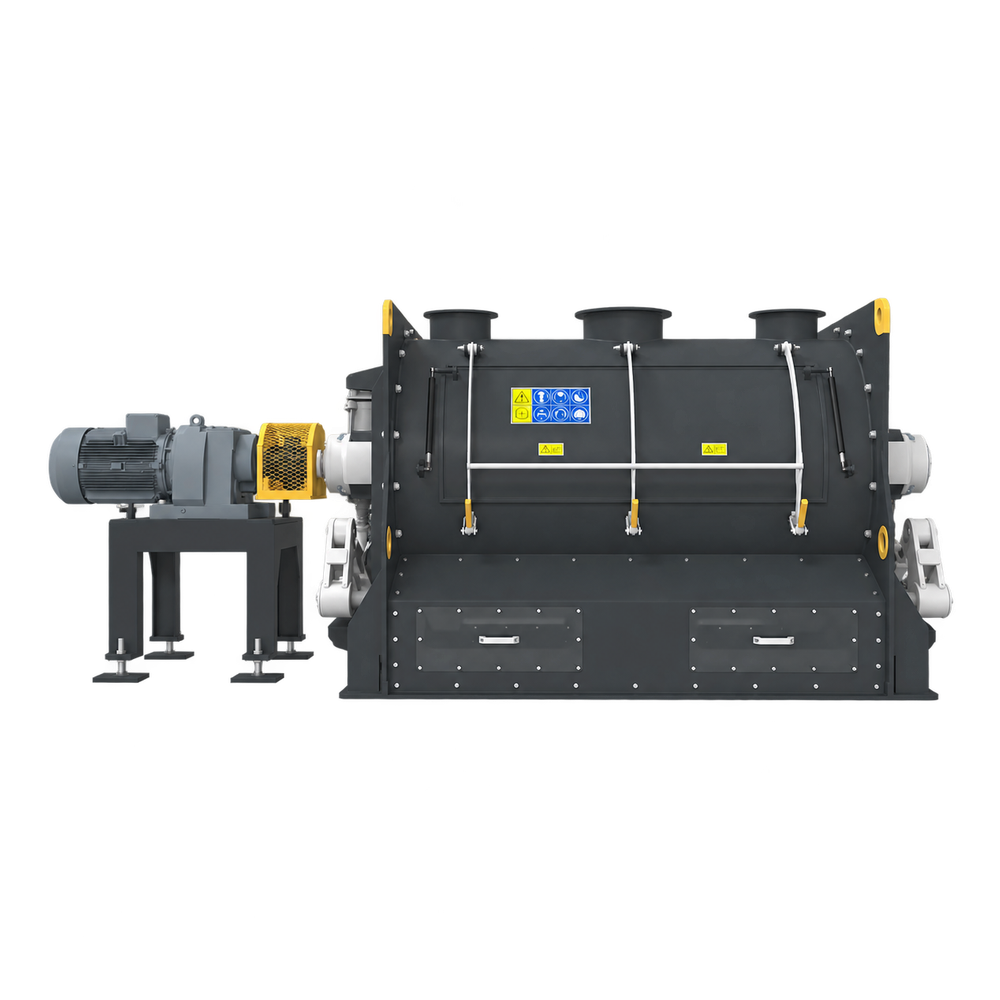
Mixer geometryIt determines the direction of material movement within the mixer. Consequently, the mixer design plays a direct role in mixing time. The mixing elements convey the material in various directions. This ensures continuous contact between the components inside the mixer. Furthermore, effective material movement minimizes stagnant zones.
Not every product yields the same performance with the same mixer configuration. For instance, a formulation with significant density differences requires a different type of movement, while very fine powders may exhibit distinct processing behaviors. Equipment selection is crucial in this regard. If an operation bases its decision solely on mixer volume, it may struggle to achieve the desired homogeneity. Conversely, a geometry tailored to specific process characteristics ensures more controlled results. At Metkan Makine, we evaluate mixer design in conjunction with product properties, thereby shaping the material movement within the mixer to meet specific process requirements.
How Does Rotor Speed Affect Mixing Time?
Rotor speed determines the rate at which the mixing elements interact with the material. However, high speed does not always equate to a shorter mixing time. Low speeds may fail to move the material sufficiently, causing the mixer to take longer to reach the target homogeneity. Conversely, excessively high speeds can create different issues.
For example, with very fine products, high speeds can generate unnecessary air movement. With some products, friction can lead to temperature increases. Additionally, in formulations with significant density differences, uncontrolled movement can increase the risk of segregation. Therefore, the operation must select the rotor speed based on product characteristics; mixer geometry also plays a vital role in this decision. The correct speed moves the material effectively while balancing energy consumption and equipment load, allowing the system to achieve the optimum mixing time in a more controlled manner.
How Does the Feeding Sequence Affect Homogeneity?
The sequence in which raw materials enter the mixer is a critical process parameter. Multi-component recipes, in particular, require a precise feeding order. Low-proportion additives might be introduced after the main raw material, though some recipes dictate a different sequence. The facility must establish this sequence based on product characteristics. Uncontrolled feeding can lead to the concentration of specific components in a single zone. The mixer must then work harder to distribute this concentration throughout the entire product volume, thereby extending the cycle time.
A proper feeding strategy improves the initial distribution, allowing the mixer to reach the target homogeneity more quickly. Furthermore, automated dosing systems stabilize the process by applying the same quantity and sequence in every cycle, thereby reducing operator-induced variations.
Do Additives Increase Mixing Time?
Low-ratio additives make the mixing process more demanding, as the mixer must distribute a very small amount of a component into a large volume of product. Pigments, chemical additives, and performance-enhancing ingredients fall into this category. If the additive's particle size differs from that of the base material, the process requires greater control. Density differences also affect mixing behavior. However, the operation should not simply increase the mixing time in every case. A pre-mixing method can yield more effective results for certain recipes, and controlled dosing also enhances homogeneity.
The feed point is also crucial; introducing the additive into the system at the appropriate location can accelerate dispersion. Therefore, the dosing system and the mixer must operate in coordination. Ultimately, low-ratio additives make process design particularly important; proper feeding and mixing arrangements support homogeneity without unnecessarily extending the process time.
How is the Optimum Mixing Time Determined?
The operation must determine the optimum mixing time through testing. While estimated times can serve as a starting point, actual process outcomes are revealed through sample analysis. First, the team defines the target homogeneity level. Then, they operate the mixer and take samples at specific intervals, ensuring samples are collected from various locations. Subsequently, laboratory results are compared. For instance, significant differences may be observed among the initial samples, but as mixing progresses, the values converge.
After a certain period, the results may cease to show significant changes. This point provides critical data for determining the optimum operating time, thereby preventing unnecessary mixing while maintaining product standards. Additionally, the process team can establish specific operating parameters for each recipe.
What Problems Does Excessively Long Mixing Cause?
Prolonged mixing does not always yield a more homogeneous product. On the contrary, beyond a certain point, it imposes additional costs on the operation. First, energy consumption increases. Mixer continues to run unnecessarily. Furthermore, the cycle time extends. Consequently, the facility produces fewer batches. Some raw materials are sensitive to prolonged mechanical action; fragile particles may undergo structural changes. Additionally, friction can raise the product temperature.
Another risk arises with products that have significant density differences. Prolonged agitation can, under certain conditions, trigger re-segregation. Thus, despite spending more time, the operation fails to gain any quality advantage. Therefore, the process team should manage mixing times based on measurement results. The goal is to determine the correct duration, not simply the longest one.
How Does Maintenance Affect Mixing Performance?
The mechanical condition of the mixer directly impacts mixing time. Mixing elements wear down over time. As wear increases, the interaction between the elements and the material changes. This change can impair material circulation. Consequently, the mixer must run longer to achieve the same level of homogeneity. The operation should not view this solely as a recipe issue. Additionally, product buildup can alter the mixer's active volume; raw materials prone to adhesion, in particular, require regular cleaning. Buildup also restricts the movement of the mixer.
Therefore, the maintenance team must regularly inspect the paddles and connections. Additionally, they must monitor the motor, gearbox, and bearing systems. Regular maintenance preserves mixing performance. It also reduces the risk of unplanned downtime. This allows the facility to manage mixing times more consistently.
How Does Automation Control Mixing Time?
AutomationIt enhances process repeatability. The system applies the parameters defined for each recipe in the same sequence. First, the automation manages the dosing of raw materials. Then, it controls the feeding sequence. The mixer operates for the specified duration. The system subsequently proceeds to the discharge phase. This structure minimizes time variations caused by operators. Furthermore, the facility maintains the same operating routine for every batch.
Recording process data also offers significant advantages. The facility can monitor operating time, motor load, and recipe details, making it easier to detect changes over time. For instance, if a continuous increase in motor load is observed, the maintenance team can inspect the system. If unexpected variations occur in the mixing time, the team can analyze the process parameters. Metkan Makine treats the mechanical system and automation as an integrated whole, enabling the facility to achieve more controlled and repeatable production.
How Are Production Capacity and Mixing Time Balanced?
A mixer's actual production capacity is not determined solely by the vessel volume; the total cycle time also significantly impacts capacity. A cycle consists of filling, mixing, and discharging stages. Consequently, any unnecessary increase in mixing time directly reduces hourly capacity.
For example, a facility might produce dozens of batches throughout the day; just a few minutes of wasted time per cycle can result in a substantial loss by the end of the day. Therefore, process optimization offers significant benefits. However, the facility should not reduce mixing time in an uncontrolled manner to boost capacity. Product standards must be maintained first, followed by the optimization of other cycle steps.
Accelerating the feeding system can provide an advantage here. Similarly, rapid and controlled discharging reduces cycle time. Ultimately, the facility should evaluate the entire line holistically, allowing it to increase production capacity while maintaining product homogeneity.
What Are the Key Criteria for Selecting a Horizontal Powder Mixer?
Correct mixer selection directly affects the mixing time. Therefore, businesses should not base their selection solely on liter or kilogram capacity. First, the bulk density of the product must be examined. Next, particle size and flow characteristics should be evaluated. The number of ingredients in the recipe is also significant. Additionally, the target batch size must be taken into account. The facility's hourly production target also influences the equipment size.
Mixer geometry, motor power, and the discharge system are other important criteria. Automation infrastructure also supports process repeatability. Metkan Makine We consider these criteria collectively when selecting a horizontal powder mixer. Thus, we develop a production solution tailored to process needs, rather than simply providing a machine.
Controlled and Homogeneous Mixing Solutions with Metkan Makine
Every powder process has unique requirements. Therefore, at Metkan Makine, we evaluate horizontal powder mixer solutions based on specific production conditions. We begin by examining the properties of the raw materials. Then, we analyze the recipe structure and batch size. We also take the target hourly capacity into account. Based on this data, we determine the appropriate mixer configuration. We also evaluate the feeding and discharge equipment within the same process context, ensuring that different sections of the line operate in harmony.
Automation solutions enhance recipe repeatability. The facility can produce the same product across different shifts under consistent process conditions. This approach facilitates quality control. The right equipment selection, appropriate mixing time, and regular maintenance work together to deliver results. Thus, the facility enhances both product homogeneity and production efficiency.
Frequently Asked Questions
What is the ideal mixing time for a horizontal powder mixer?
There is no single ideal time for every product; raw material properties and the formulation structure influence the duration. The facility determines the optimum time for its specific process through sample analysis.
Does extending the mixing time improve homogeneity?
It improves mixing homogeneity up to a certain point. However, beyond the optimum point, additional time generally offers no advantage. Moreover, long cycles increase energy consumption and reduce capacity.
Why is the mixer fill level important?
The correct fill level ensures the material moves freely within the mixer. Overfilling restricts circulation, while underfilling reduces the effectiveness of the mixing elements.
Does particle size affect mixing time?
Yes. Different particle sizes result in different movement characteristics. Therefore, recipes with a wide particle size distribution require more careful process control.
Does the mixing time decrease when the rotor speed increases?
Not always. Excessively high rotor speeds can cause segregation or overheating in some products. The operator must determine the correct speed based on product characteristics and mixer design.
Does mixer maintenance affect mixing quality?
Yes. Worn mixing elements impair material movement. Regular maintenance preserves mixer performance and helps prevent unexpected increases in mixing time.
How does automation contribute to the mixing process?
Automation controls dosing, the feeding sequence, and mixing time. This ensures the facility applies the same process routine for every batch. Additionally, recorded data supports quality and maintenance analyses.
What information is required when selecting a horizontal powder mixer?
Product density, particle size, and flow characteristics are the primary data points. Batch size and hourly capacity targets are also important. Metkan Makine evaluates this data to design a solution tailored to the process.
Boost Your Production Efficiency with the Right Mixing Time
For your horizontal powder mixer Homogeneous mixture, optimal cycle time, and high production efficiency If these are your goals, a solution tailored to your process conditions is crucial. At Metkan Makine, we evaluate the entire process—from raw material characteristics to capacity targets—and develop horizontal powder mixer and process solutions suited to your production line.
For a mixer solution and technical support tailored to your project, Metkan Makine with contact us.