New Facility or Line Revamp?
Production in crushing-screening facilities As demand increases, so does the need for capacity. At this point, businesses face a significant investment decision: Should the existing line be expanded through a revamp, or should the business establish a new crushing and screening plant? The right decision depends on more than just the investment budget; the performance of existing machinery, process bottlenecks, and target capacity directly influence the choice. Material properties also determine equipment selection. Furthermore, site space and energy consumption shape the investment model.
For instance, if a business merely increases crusher capacity, production does not rise at the same rate, because the screen or conveyor line ...can limit [performance]. Similarly, continuously adding new equipment to an old facility increases the total cost. At Metkan, we approach the investment process by considering the entire line. First, we analyze current production performance. Then, we identify the points that limit capacity. Afterward, we develop an investment model aligned with the target capacity. This ensures the operational budget is directed toward the right areas.
Contents
- Why is the investment decision for a crushing and screening line important?
- How is the actual capacity of the existing line determined?
- When does a line revision offer advantages?
- When is a new crushing and screening plant the preferred option?
- How does bottleneck analysis guide the investment decision?
- Why is crusher capacity alone insufficient?
- How does the screening system affect capacity?
- Why is conveying equipment important?
- What advantages does automation infrastructure provide?
- How is energy consumption evaluated?
- How do site conditions influence the investment decision?
- How are investment costs compared?
- Why are future capacity targets important?
- Investment planning with Metkan
- Frequently Asked Questions
Why Is the Investment Decision for a Crushing-Screening Line Important?
Increasing capacity affects the entire production line. Therefore, an enterprise should not base its investment decision on a single machine. Feeders, crushers, screens, and conveying equipment operate within a shared capacity framework. A limitation in one piece of equipment reduces the production output of the entire line. For instance, if the crusher processes 100 tons of product per hour, the screen must also be capable of handling that load. If the screen processes only 70 tons, the line cannot reach a production rate of 100 tons. The same applies to belt conveyors and bucket elevators.
Consequently, the enterprise examines the entire process chain prior to investment. It compares actual production figures and identifies bottlenecks. It then makes a decision regarding upgrades or a new facility based on this data. This approach prevents unnecessary machinery investments and ensures the enterprise achieves higher efficiency from the capacity increase.
How Is the Actual Capacity of an Existing Crushing-Screening Line Determined?
The first step is to measure the actual production capacity. Nominal values found in machinery catalogs do not yield sufficient results on their own, as actual operating conditions directly alter capacity. The enterprise first measures hourly and shift-based production volumes. It then checks the feeder flow rate, monitors the crusher motor load, and examines the material distribution on the screen. It also records conveyor fill rates.
The physical properties of the material also affect performance. High moisture content reduces screening efficiency. Hard material increases the load on the crusher. Meanwhile, the proportion of fines alters screen behavior. At Metkan, we evaluate these data collectively. This allows us to determine the line's actual production limit. We then clarify which equipment should be prioritized for capacity expansion.
When Does a Line Revamp Offer Advantages?
If the existing plant's main equipment is operating reliably, a line revamp presents a strong investment option.. This is particularly beneficial when bottlenecks are concentrated at specific points, allowing the operation to increase capacity without replacing the entire plant. For instance, the existing crusher might meet the target tonnage, yet the screen capacity remains insufficient. In this scenario, the operation upgrades the screening system, thereby making better use of the existing crusher's capacity.
Similarly, a low-capacity conveyor line can limit production. The operation can adjust the belt width or conveying speed to accelerate material flow. Automation upgrades also yield significant benefits; the control system regulates feed rates based on crusher load, thereby minimizing sudden load fluctuations. Ultimately, for plants with robust mechanical infrastructure, the right revamp keeps investment costs under control while preserving the value of existing equipment.
When Does a New Crushing and Screening Plant Become the Best Option?
Capacity target If the target significantly exceeds the limits of the existing line, a new plant represents a more robust investment model. This is because a substantial increase in capacity requires the simultaneous upgrading of multiple pieces of equipment. For instance, if an operation aims to double its current capacity, this goal necessitates new crushers, screens, conveyors, and feeding systems. Additionally, the electrical infrastructure and automation systems must be expanded. At this stage, the cost of piecemeal revisions rises rapidly.
A new plant, however, offers the opportunity to plan the process flow from scratch.Metkan sizes all equipment based on the same capacity target. This ensures balanced operation across the feeding, crushing, screening, and conveying stages. Furthermore, a new plant supports future growth, leaving adequate space for subsequent capacity targets. This approach keeps long-term investment costs under control.
How Does Bottleneck Analysis Guide Investment Decisions?
Every production line has one or more critical points that limit capacity.By accurately identifying these points, an operation can utilize its investment budget efficiently. Bottlenecks sometimes occur at the crusher. In some plants, screen capacity limits production; in others, the conveyor system slows down material flow.
For example, if excessive material accumulates on the screen surface, classification efficiency drops, and the circulating load increases. Subsequently, the crusher re-processes the same material. This cycle increases energy consumption and reduces net output. Therefore, at Metkan, we examine the entire process flow during bottleneck analysis. We compare motor loads, material flow, and equipment capacities. In this way, we clearly determine where the investment should be directed.
Why Is Crusher Capacity Alone Not Sufficient?
CrusherIt is one of the facility's key pieces of production equipment. However, high crusher capacity does not automatically equate to high plant capacity. The feeder must supply sufficient material to the crusher. The crusher must prepare the product to the target particle size. The screen must classify this product at the correct speed. Finally, the conveying system must transfer the product without interruption.
Each piece of equipment in this chain affects the others. For example, if the crusher capacity is increased while the screen remains unchanged, material accumulates on the screen. This situation reduces separation performance. Furthermore, overfeeding negatively impacts crusher performance. Motor load rises. Wear accelerates. Energy consumption increases. Therefore, the operation must plan crusher investments in conjunction with the overall process capacity.
How Does the Screening System Affect Capacity?
The screening system directly determines product quality and production capacity. Screen surface area, the number of decks, and screen aperture size influence performance. When the operation increases capacity, a greater volume of material reaches the screen. If the existing screen cannot handle this load, material accumulates on the surface. Subsequently, classification precision decreases.
At this stage, the operation utilizes a larger screen surface area and selects appropriate vibration characteristics. The correct screen aperture also supports the target particle size. Material moisture content and stickiness further influence screening performance. Therefore, Metkan does not focus solely on tonnage figures when selecting equipment; it also evaluates material characteristics and the target product distribution. This ensures that product quality is maintained even as capacity increases.
Why Are Belt Conveyor and Bucket Elevator Capacities Important?
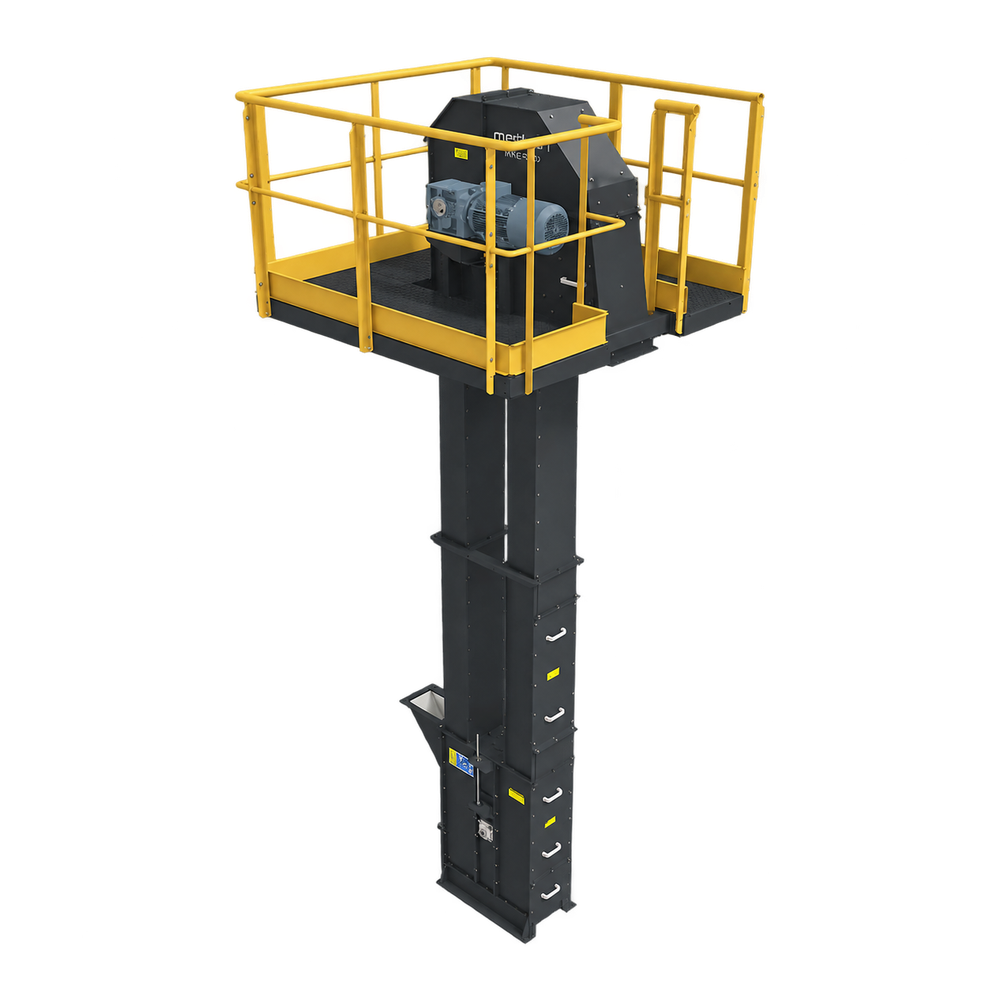
Conveying equipment forms the connection points of the production line. Consequently, belt conveyor or bucket elevator capacity limitations slow down the entire facility. Belt width plays a crucial role in belt conveyors, and belt speed also affects the conveying rate. Additionally, material density and the angle of inclination influence capacity.
For bucket elevators, bucket volume and bucket spacing are the determining factors. Operating speed also affects the hourly conveying capacity. Operations must carefully monitor this equipment when increasing capacity; otherwise, the investment in crushers and screens will not yield the expected results. At Metkan, we size our conveying systems according to the target plant capacity, thereby ensuring a steady flow of material between process points.
How Does Automation Infrastructure Support Capacity Increases?
The automation system strengthens operational coordination between pieces of equipment. It also enhances the operator's control over the process. For instance, sensors continuously monitor the crusher motor load. The control system shares this data with the feeder. When the motor load rises, the system reduces the feed rate; when the load returns to normal, the feed rate increases again.
A similar control logic applies to bunker levels. The system monitors material levels, reducing the risk of overflow or running empty. Automation also logs fault signals, allowing the operation to track recurring issues. Consequently, the right automation system reinforces production continuity and contributes to achieving higher efficiency from the capacity increase.
How Does Energy Consumption Affect Investment Decisions?
Energy costs are a significant part of the operating expenses for crushing and screening plants. Therefore, it is incorrect to base investment decisions solely on total installed power. Operations should track energy consumption per ton, as this figure provides a clearer indication of actual efficiency. For instance, if an old crusher yields low tonnage while consuming high motor power, energy costs rise. Similarly, an incorrectly selected conveyor motor leads to unnecessary energy consumption.
During a line revision, motor loads are re-evaluated, and mechanical losses are checked. In new plant design, however, equipment is selected based on a shared capacity target. Metkan considers energy efficiency alongside capacity targets during process design. This ensures the operation not only increases output but also controls the cost per ton.
How Do Site Conditions Affect Investment Decisions?
The plant site directly influences the investment model. If the existing site offers sufficient room for expansion, line revision proceeds more easily. However, installing new equipment in confined spaces is challenging. Larger screens require ample maintenance space, and conveyor routes also demand extra room. Furthermore, operator access and service points must be maintained.
Plant height is also significant. Bucket elevators and bunker systems require vertical clearance. If building height is insufficient, the process layout must be altered. Investing in a new plant offers greater design flexibility in this regard, allowing the operation to plan equipment placement according to the production flow. Therefore, site analysis should be part of the initial stages of the investment decision.
How Do the Costs of Line Revision and a New Plant Compare?
Considering only the initial purchase cost leads to an incomplete picture when making an investment decision. The operation must calculate the total cost of ownership. This calculation encompasses equipment costs as well as expenses for installation, energy, and maintenance. Spare part costs are also taken into account. Additionally, production losses resulting from unplanned downtime are significant. Refurbishment can offer an advantage due to a lower initial budget. However, if older machines frequently break down, maintenance costs rise. In this scenario, the long-term benefit of refurbishment diminishes.
A new facility requires a higher initial investment. Conversely, a balanced selection of equipment reduces the maintenance burden. Energy efficiency also lowers operating costs. Therefore, the business should compare both scenarios based on the same production target.
Why Are Future Capacity Targets Important?
Crushing and screening plant An investment should not merely meet current demand; the enterprise must also incorporate future production targets into its plans. For instance, a 20% capacity increase might suffice today, yet the sales plan could project 60% growth within three years. In such a scenario, a minor revision would quickly prove inadequate.
By establishing future capacity targets from the outset, the enterprise can make more accurate equipment choices and plan the facility layout to accommodate subsequent expansions. Metkan We take these growth scenarios into account during facility projects. This ensures the enterprise does not have to overhaul the system with every capacity increase. Long-term planning extends the investment's economic lifespan while simultaneously reducing future expansion costs.
New Facility or Line Revamp?
The answer to this question depends on the existing facility's technical condition, as well as the target capacity and long-term production plan. If the core equipment remains robust, a revision offers advantages; for example, if capacity issues stem from just a few bottlenecks, the enterprise can boost production by upgrading those specific points. Conversely, if multiple pieces of equipment have reached their capacity limits, a new facility represents a more sound investment. A target for a substantial capacity increase also strengthens the case for a new facility.
Before making a decision, the enterprise must clarify the following data:
- Current hourly production capacity
- Target production capacity
- Bottleneck-causing equipment
- Mechanical condition of existing machinery
- Energy consumption per ton
- Maintenance and breakdown costs
- Site expansion capacity
- Status of automation infrastructure
- Future production targets
This data substantiates the investment decision. Consequently, the enterprise acts based on technical data rather than estimates.
Plan Your Crushing-Screening Line Investment Correctly with Metkan
Metkan as Crushing-Screening We evaluate the entire process flow within crushing-screening facilities. First, we measure the capacity of the existing line. Next, we identify equipment causing bottlenecks. We analyze material characteristics and target product sizes. Additionally, we examine energy consumption, conveying capacity, and site conditions. In doing so, we reveal the true growth potential of the existing line.
If a revision yields satisfactory results, we formulate the investment plan based on the existing infrastructure. We reconfigure crushers, screens, conveyors, and other equipment to meet the target capacity. If the existing system fails to meet the objectives, we proceed to a new plant plan. At this stage, we select all equipment based on a unified process capacity, thereby establishing a balanced, controlled, and sustainable production line structure.
Frequently Asked Questions
Is expanding the existing crushing-screening line more economical?
If the existing machinery is in good condition, a revision lowers the investment cost. This is particularly effective when only a few pieces of equipment are causing bottlenecks; the operation can upgrade these specific points, thereby preserving the existing infrastructure while increasing capacity.
When is a new crushing and screening plant the better investment?
A new plant becomes the preferred option when multiple sections of the existing line have reached their capacity limits. A goal of significant capacity expansion also reinforces the need for a new plant. The operation thus establishes the entire process based on a target capacity.
Does simply replacing the crusher increase plant capacity?
Replacing the crusher alone does not guarantee a capacity increase. Screening and conveying equipment must also be capable of handling the new production volume. Therefore, the operation must analyze the capacity of the entire line holistically.
Why is bottleneck analysis important?
Bottleneck analysis identifies the point that limits production. The operation can then direct its investment budget specifically to this point, thereby avoiding unnecessary equipment replacements.
Does an automation system increase the efficiency of the crushing and screening line?
Proper automation balances equipment loads. The control system adjusts the feed rate according to process conditions, resulting in more stable production and reduced sudden load spikes.
Why should belt conveyor capacity be checked?
Belt conveyors transport material between process points. Low conveying capacity limits the speed of the entire line. Therefore, when increasing operational capacity, one must check the belt width, speed, and motor power.
How is energy consumption evaluated during a line revision?
The operation should measure energy consumption per ton. This value provides a more accurate indication of equipment efficiency. Machines with high energy consumption increase total production costs.
Should future capacity increases be incorporated into the plant design?
Yes. Future production targets determine equipment selection and site layout. When an operation accounts for growth plans from the start, it can manage subsequent investments more effectively.
Plan Your Crushing-Screening Investment with Metkan
Making the right investment decision for capacity expansion begins with understanding the actual performance of the existing line. At Metkan, we technically evaluate your crushing-screening line, identify bottlenecks, and plan a solution tailored to your target capacity.
To revise your existing line or establish a new crushing and screening plant, Metkan with contact us.