Motor Power Selection for Belt Conveyors
Belt conveyors...transport material systematically within production facilities. The system ensures a continuous flow of product between the equipment on the production line. However, the conveyor's performance is determined by numerous technical factors. Chief among these factors is belt conveyor motor power selection. If the motor power is insufficient, the conveyor struggles under load. The motor draws higher current, and the belt struggles to reach the target speed. This situation directly reduces production capacity. Prolonged strain also shortens the service life of the motor and gearbox.
An oversized motor offers no advantage to the operation; on the contrary, it increases investment costs. Furthermore, the motor often operates outside its efficient working range. Therefore, engineers must calculate motor power based on actual process conditions. At Metkan Makine, we approach the conveying system as a whole in our belt conveyor projects, analyzing capacity, material properties, conveying distance, and inclination. We also evaluate belt speed and the drive configuration. This allows us to develop conveyor solutions tailored to the production line's requirements.
Contents
- Why is motor power important for belt conveyors?
- What criteria determine motor power?
- How does conveying capacity affect motor power?
- Why is material density important?
- How does conveyor length affect motor power?
- How does inclination affect motor requirements?
- Why is belt speed important when selecting a motor?
- How do friction and mechanical resistance have an impact?
- Why is starting torque important?
- How is the gear reducer selected?
- What problems arise from using an oversized motor?
- What are the signs of an undersized motor?
- How can energy consumption be reduced?
- How does maintenance affect motor load?
- How does automation support motor performance?
- Metkan Makine belt conveyor solutions
- Frequently Asked Questions
Why Is Motor Power Important for Belt Conveyors?
The motor supplies energy to the drive system that moves the conveyor belt. The gearbox converts this motion into the appropriate speed and torque. Subsequently, the drive pulley moves the belt, and the belt transports the material on it to the target destination. Therefore, the motor directly affects the conveyor's operating performance. Insufficient power causes problems, particularly when the belt is loaded; the conveyor struggles during startup, and motor current increases. Additionally, belt speed may become unstable during load fluctuations.
Selecting the right motor helps the system maintain its target capacity. Furthermore, the motor operates under a more balanced load, preventing unnecessary strain on the gearbox and other mechanical components. However, focusing solely on high motor power is not the correct approach. Engineers should select the motor based on the conveyor's actual requirements, thereby allowing the operation to control both energy consumption and investment costs.
What Criteria Determine Belt Conveyor Motor Power?
Motor power Many parameters play a role in the calculation. First, hourly conveying capacity is significant, as the total material load on the belt increases with capacity. Second, conveyor geometry comes into play; length and inclination alter the load the motor must handle. On inclined lines, in particular, the motor generates additional power to overcome gravity. The bulk density of the material also directly affects the calculation; heavy materials create a greater load for the same volume. Additionally, belt speed, pulley diameter, and mechanical resistances influence drive requirements.
The following criteria must be considered together when selecting a motor:
- Hourly conveying capacity
- Material bulk density
- Material particle size
- Conveyor length
- Conveying height
- Conveyor inclination
- Belt width
- Belt speed
- Pulley diameter
- Roller and bearing resistances
- Start-up conditions
- Operating time
- Gearbox ratio
- Process operating characteristics
All these parameters affect the motor's operating point. Therefore, selecting a motor based on a single value does not yield accurate results.
How Does Conveying Capacity Affect Motor Power?
Conveying capacity is one of the fundamental data points for belt conveyor motor calculations. Facilities usually express this value in t/h. As capacity increases, the belt transports more material. Consequently, the motor encounters a higher load. For instance, a system transporting 10 tons per hour does not use the same drive configuration as one transporting 100 tons. As the load increases, the required tractive force also rises; therefore, the motor and gearbox must meet this demand.
However, evaluating capacity in isolation is insufficient. Material density, belt width, and belt speed are directly related to capacity. Two different products with the same tonnage may require different conveying geometries. For this reason, at Metkan Makine, we analyze capacity in conjunction with other process data. Thus, we do not determine motor power solely based on the t/h value; we also take the material's actual conveying behavior into account.
How Does Material Density Affect Motor Selection?
The bulk density of the material is one of the key factors determining the actual load on the belt. As density increases, more mass is transported within the same volume; consequently, the conveyor's drive requirements rise. For instance, lightweight granular products and dense mineral materials create different load characteristics. With the same belt width and speed, the motor encounters different force requirements.
In addition, particle size affects conveying behavior. Coarse-grained materials can generate impact forces at the loading point, whereas fine powders exhibit different flow characteristics on the belt surface. Moisture content is also a significant factor; moist material can adhere to the belt or transfer points, leading to increased material accumulation within the system. Over time, this accumulation raises the resistance to movement. Therefore, selecting the correct motor must begin with an analysis of the material properties.
How Does Conveyor Length Affect Motor Power?
As conveyor length increases, so does the amount of moving equipment in the system. A longer belt implies more carrying rollers and rotating components. Each carrying roller creates a certain amount of resistance to movement; while the resistance from a single roller may be low, hundreds of rollers collectively generate significant force. Furthermore, a long belt imposes an additional load on the drive system due to its own weight. If a large amount of material is present on the belt, the total load rises even further. However, a long conveyor does not always require a massive motor. For instance, a long, horizontal, low-capacity line might require relatively low power, whereas a short but steeply inclined conveyor could demand higher power. Consequently, engineers must evaluate length in conjunction with capacity and inclination.
How Does Inclination Alter Motor Power Requirements?
In inclined conveyors, the motor does not merely move the belt; it also lifts the material to a specific height. Therefore, the vertical conveying height increases the motor power requirement. As the inclination increases, the effect of gravity becomes more pronounced. This effect is particularly significant in high-capacity systems. The motor generates the additional power required to convey tons of material upwards every hour.
However, motor power is not the only factor that matters here; the stability of the material on the belt also plays a critical role. Steep inclines can cause certain products to slide backward. In such cases, simply increasing motor power will not solve the problem. The design team must also evaluate the belt surface, the angle of inclination, and the feed mechanism. Metkan Makine considers these parameters holistically when designing inclined conveyors, ensuring the system maintains both conveying capacity and stable product flow.
Why Is Belt Speed Important When Selecting a Motor?
Belt speed affects the amount of material the conveyor transports within a given timeframe. However, high belt speed does not always equate to better performance. Excessive speed can lead to control issues, particularly with dusty materials; products may scatter at transfer points, and airborne dust levels in the surrounding area may increase.
Conversely, excessively low speeds limit capacity, potentially forcing the operator to use a wider belt to maintain the same throughput. Belt speed is determined by a combination of motor RPM, gearbox ratio, and drum diameter; therefore, the design team must consider these three elements together. The optimal speed must align with the product's characteristics and the target capacity, ensuring the motor does not operate under unnecessary load while the conveyor maintains the desired material flow.
How Do Friction and Mechanical Resistance Affect Motor Load?
When a conveyor system is in operation, various mechanical components generate resistance to movement. Rollers, bearings, pulleys, and the belt all contribute to this resistance. Properly functioning rollers create low resistance; however, worn or seized rollers can significantly increase the motor load. Belt misalignment also leads to additional friction. Furthermore, material buildup on pulley surfaces can place a strain on the system—a situation that occurs more frequently in environments with heavy dust. Consequently, the quality of maintenance directly impacts motor performance. Engineers must account for normal mechanical resistances when calculating motor requirements. At the same time, the operator must keep these resistances under control through an appropriate maintenance program. This ensures more stable motor operation while reducing energy consumption and mechanical wear.
Why Is Starting Torque Important?
A conveyor experiences different load conditions during startup compared to normal operation. Starting a loaded belt, in particular, requires higher torque. During initial movement, the motor must set the stationary mass of the belt and the material in motion. Simultaneously, the rollers and pulleys begin to rotate. Consequently, the drive system encounters higher resistance at the moment of startup. Startup conditions are especially critical for long conveyors. In high-capacity systems, the motor must move a much larger mass of material.
A frequency converter can make this process controlled. The system gradually increases the motor speed, preventing the belt and mechanical equipment from experiencing sudden torque shocks. However, the drive is not a substitute for accurate motor calculations. The design team must first calculate the required torque and then select the appropriate motor and drive combination.
How Does Gearbox Selection Affect Motor Performance?
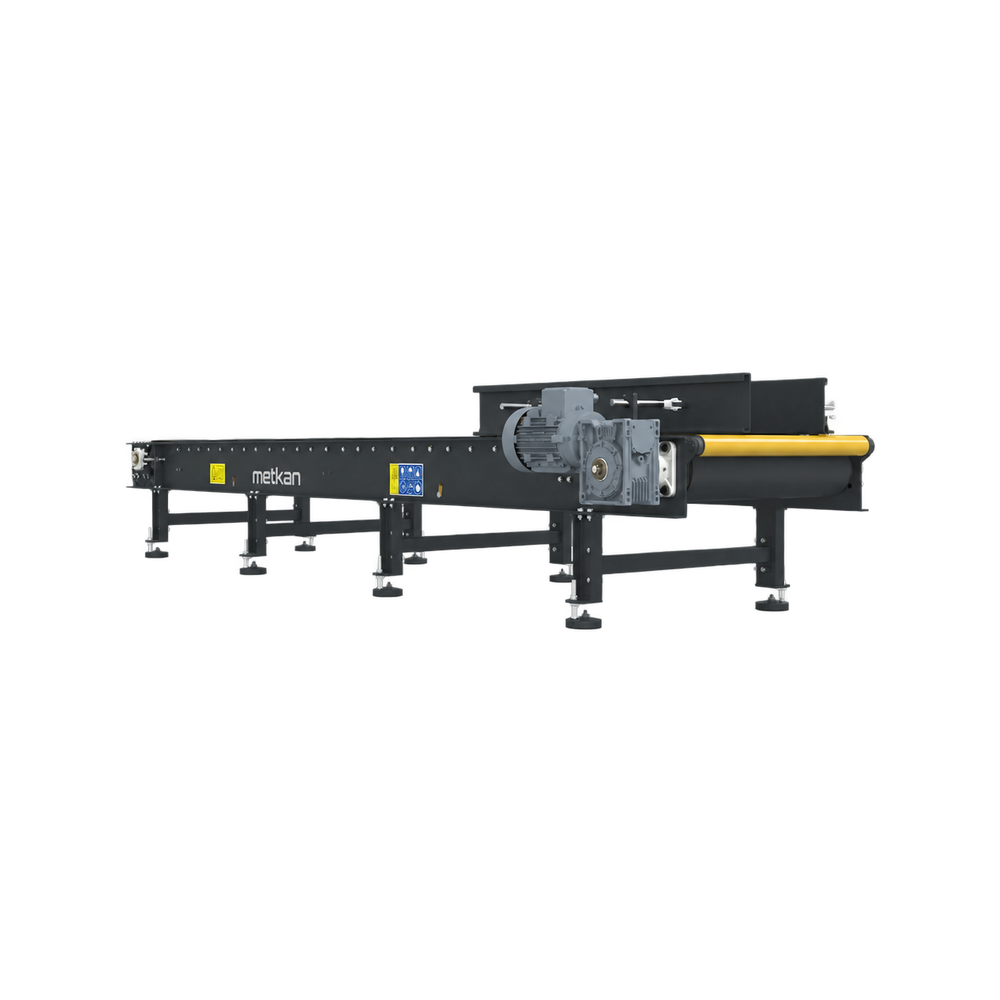
Motors operate at high speeds, whereas belt conveyors typically require lower pulley speeds. The gearbox acts as the intermediary between the motor and the drive pulley. It reduces the motor speed to the appropriate level while generating the necessary torque at the drive pulley. Therefore, the gearbox ratio directly influences the belt speed.
Selecting the wrong ratio can cause the conveyor to run too fast or too slow. Furthermore, the torque characteristics of the drive system may deviate from process requirements. During the design phase, motor speed, pulley diameter, and target belt speed must be calculated in conjunction. Engineers must then determine the appropriate gearbox ratio. Additionally, operating time and load characteristics influence the service factor. Demanding operating conditions require a more robust gearbox design. At Metkan Makine, we evaluate motor and gearbox selection as an integrated drive system.
Why Is Selecting an Oversized Motor Not the Right Choice?
Some facilities view high motor power as a "safe" choice. However, an oversized motor does not always offer advantages. First, a larger motor entails higher initial investment costs. The electrical infrastructure supporting the motor must also be scaled up accordingly. If a variable frequency drive (VFD) is used, its capacity requirement also increases. Furthermore, a large motor may operate under low-load conditions; this operating point can negatively impact energy efficiency. The facility ends up establishing energy infrastructure for capacity it does not actually need.
High torque capacity also demands attention regarding the mechanical system. Components such as the drum, shaft, coupling, and gearbox must be compatible with this torque level. Therefore, using an oversized motor is not the correct approach. The design team should calculate the actual requirement and incorporate an appropriate operating margin.
What Problems Arise from Insufficient Motor Power?
Insufficient motor power often manifests as startup difficulties. A loaded conveyor struggles to move; in some cases, the motor fails to initiate movement altogether. Motor current rises above normal levels, and this high current increases the motor's temperature. Prolonged exposure to elevated temperatures negatively affects the lifespan of the insulation. Additionally, the belt may lose speed under load, reducing conveying capacity. Consequently, downstream process equipment fails to receive a sufficient supply of product.
If protection relays trip frequently, the facility should check the motor load. However, the problem does not always stem from low motor power. Seized rollers or incorrect belt tension can also place a strain on the motor. Therefore, the maintenance team should conduct both electrical and mechanical checks.
Does Belt Tension Affect Motor Load?
Belt tension is critical for the proper operation of the conveyor. A belt that is too loose may slip on the drive pulley. Conversely, excessive tension places unnecessary strain on the mechanical system. High tension increases the load on bearings and pulley shafts; as a result, the motor may encounter greater resistance. Additionally, the service life of the belt may be reduced.
Low tension makes it difficult to transfer the driving force to the belt. The belt may slip while the drum rotates, causing heat buildup and wear on the belt surface. Therefore, the operator must adjust the belt tension in accordance with the manufacturer's specifications. The maintenance team should check the tension regularly. Proper tension ensures the torque generated by the motor is transferred to the belt more efficiently, allowing the system to maintain its target capacity more consistently.
How is the Safety Margin for Motor Power Determined?
A specific operating margin is required when calculating motor specifications. However, the operator should not determine this margin arbitrarily. An excessively high margin leads to the selection of an unnecessarily large motor. Operating conditions dictate the safety margin. Variable feed rates are a significant factor. Additionally, fluctuations in material density affect the motor load. Systems that undergo frequent start-stop cycles exhibit different operating characteristics. Harsh environmental conditions can also influence motor selection. Therefore, engineers must analyze the facility's actual operating scenario.
The goal is not to select a power rating far exceeding theoretical requirements. Instead, the aim is to ensure the motor can respond to anticipated load fluctuations. An appropriate operating margin helps the motor stay within its nominal operating range while preventing unnecessary increases in investment costs.
How Can Energy Consumption Be Reduced?
The first step toward energy efficiency is selecting the right motor. The motor should operate within the appropriate load range during normal operation. Furthermore, the mechanical system must offer low resistance; the maintenance team should replace any seized rollers. Additionally, belt alignment and tension must be checked regularly. Buildup on the drum surface can also increase energy consumption; therefore, the facility should not neglect its cleaning schedule.
Speed control offers an additional advantage for lines operating with variable capacity. Using a frequency converter, the facility can adjust belt speed according to production needs, preventing the conveyor from running at unnecessarily high speeds during low-capacity periods. Automation systems can also reduce idle running times. Consequently, the facility lowers both energy consumption and equipment operating time.
How Does Maintenance Affect Motor Load?
Maintenance quality directly impacts motor performance. A sound mechanical system allows the motor to operate close to its design load. For instance, a seized roller can increase motor current, while incorrect belt alignment raises friction. Excessive belt tension increases loads on the drum and bearings. Gearbox maintenance is also crucial; proper lubrication reduces friction and keeps gearbox temperatures under control. By regularly monitoring motor current, the maintenance team can detect mechanical issues early. A gradual rise in normal current levels may indicate increased resistance within the system. Therefore, facilities should not view motor maintenance separately from conveyor maintenance; combining mechanical and electrical checks yields better results.
How Does Automation Support Motor Performance?
Automation systems can continuously monitor the operating data of the conveyor motor. Motor current is a key metric among this data, while drive frequency and operating time also provide valuable information. An unusual spike in current can serve as an early warning for the maintenance team. This allows the team to check the system before a malfunction escalates. Additionally, the automation system can operate the conveyors in a specific sequence. This approach is particularly important for lines equipped with a large number of conveying units. The system manages the conveyors based on material flow, while speed control ensures process flexibility. It reduces belt speed when operational capacity drops and increases it to the appropriate level when capacity rises. Consequently, the motor operates under conditions that better align with process requirements, and the facility reduces unnecessary energy consumption.
How to Configure the Right Drive System for Belt Conveyors?
Selecting the right drive system requires comprehensive engineering work. The motor, gearbox, coupling, and pulley must function in harmony. Initially, engineers calculate the required tractive force and determine the target belt speed; pulley diameter and rotational speed become critical at this stage. Subsequently, the motor power and gearbox ratio are finalized. If the system undergoes frequent starts, starting torque becomes a crucial factor. If variable capacity is required, the selection of a variable speed drive (VFD) is also incorporated into the design. Furthermore, the drive pulley must maintain sufficient contact with the belt, as the torque generated by the motor is transferred to the belt only under proper contact conditions. When all these components operate in unison, the conveyor transports material at the target capacity with greater stability.
Metkan Makine Belt Conveyor Solutions
At Metkan Makine, we approach belt conveyor design as more than just a matter of equipment selection. We begin by analyzing the production process, followed by an evaluation of material properties and target capacity. Factors such as conveying distance, conveyor inclination, and plant layout determine the subsequent design steps. Based on this data, we assess the appropriate belt width and speed, and then calculate the requirements for the drive system.
We align the motor, gearbox, and pulley configuration with the specific process conditions. We also consider the conveyor's integration with other process equipment. Consistent material flow is vital in processes such as crushing, screening, and mixing; therefore, the conveyor's compatibility with upstream and downstream equipment directly impacts production performance. At Metkan Makine, our goal extends beyond simply moving the belt; we aim to ensure a balanced and sustainable material flow across the entire production line.
Frequently Asked Questions
How is the motor power for a belt conveyor calculated?
Engineers first determine the conveying capacity and material density. Then, they take the conveyor length, inclination, and belt speed into account. In the final stage, they select the appropriate motor power by evaluating mechanical resistances and startup requirements.
Does motor power increase as conveyor length increases?
Length generally increases total resistance to motion because more belt and rollers are involved in the system. However, since capacity, inclination, and material properties also determine motor power, looking at length alone is not sufficient.
Why do inclined belt conveyors consume more power?
In an inclined system, the motor lifts the material. This process requires additional energy to overcome gravity. High capacity and significant conveying heights, in particular, noticeably increase the motor's power requirements.
Does using a larger motor make the conveyor safer?
No. An oversized motor increases investment costs and may operate outside its optimal efficiency range. Proper engineering calculations ensure the selection of a motor that is both safe and efficient.
Why does a belt conveyor motor overheat?
Overloading can raise the motor temperature. Additionally, jammed rollers, excessive belt tension, or mechanical friction place a strain on the motor. The maintenance team should check the mechanical condition of the conveyor alongside the motor current.
Does the choice of gearbox affect motor power?
A gearbox does not increase motor power. However, it adjusts the motor speed and output torque to meet the conveyor's requirements. An incorrect gear ratio negatively affects belt speed and drive performance.
Why is a frequency converter used?
A frequency converter manages motor speed in a controlled manner. It also helps reduce mechanical load during startup. On lines with variable capacity, it adjusts the operating belt speed according to process requirements.
Why does conveyor motor current increase over time?
Increased mechanical resistance can raise the motor current. Seized rollers, belt misalignment, or material buildup increase this resistance. Therefore, changes in current provide the maintenance team with an important early warning.
Determine the Right Motor and Drive Solution for Your Belt Conveyor System
Selecting the right motor; capacity, energy efficiency, and line continuity directly. At Metkan Makine, we evaluate all process data, ranging from material properties to the conveying distance. We then tailor the belt conveyor system to the specific needs of your production line.
For your belt conveyor project, motor-gearbox selection, and conveying solutions customized for your production line Metkan Makine with contact us.